Walk into a luxury apartment in Miami, Dubai, or London, and the amenity sheet looks roughly the same. Gym, pool, concierge, valet. Whether the brief is luxury apartments for rent in a global city or high-end apartments for purchase in Grand Cayman, buyers and renters have been trained to scan a checklist. And they are right to do so. A floor plan can be redesigned, finishes can be replaced, but the amenity architecture is what truly decides whether a property holds its place at the top of the market or quietly slides down it.
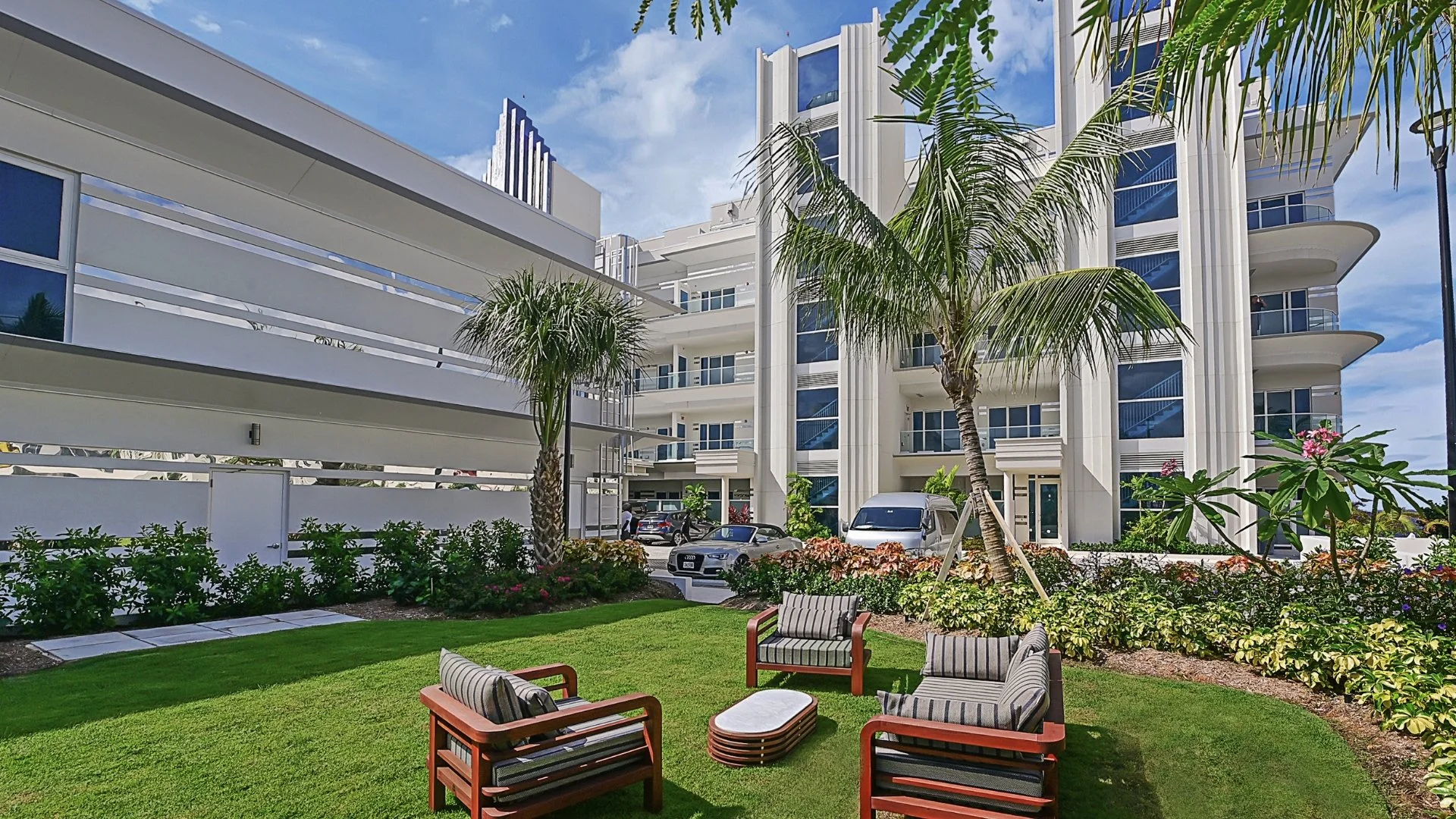
FIN Grand Cayman, a 36-residence Art Deco development on Seven Mile Beach, was built around that distinction. Not what to put in the brochure, but what residents need to feel like a building is theirs. At FIN, amenities are not features; they are the operating system of the residence.
This article walks through the four most-asked questions when evaluating high-end apartments and how FIN Grand Cayman and Silverfin Development Company answer each one. For a broader read on the philosophy behind decisions like these, developer Mike Ryan's essay The Art of Luxury Resorts is a useful companion piece.
How Important Are Amenities, and What Types Do You Actually Need in a Luxury Apartment?
"I've always believed that luxury resort development is about more than building beautiful spaces; it's about crafting a platform for experiences that stay with people long after they've left."
For high-end buyers, amenities carry roughly the same weight as location. They define the daily rhythm of the residence, signal what kind of life the building was designed to support, and protect value through cycles that flatten out less serious projects.
The useful split is two-part. Structural amenities are the things you stop noticing when they work: 24-hour security, climate systems, controlled entry, building-wide power resilience, and the engineering inside the walls. Experiential amenities are the visible ones: concierge, fitness, spa, dining, and a lobby that doubles as a social space. Each side carries its own consequence. Skip the structural layer, and the experience erodes within a decade. Skip the experiential, and the building feels uninhabited even when full. Top-tier developments invest in both.
That conviction shaped the build at FIN Grand Cayman. Everything from door handles and light fixtures to paint colors and the polished stainless steel drain covers was custom-fabricated to spec. Every component, both structural and experiential, was weighed and tested. That discipline is what positions FIN to earn its place at the top of the most prized stretch on the island, the way landmark buildings do.
What's the Difference Between “Nice-to-Have” and “Must-Have” Amenities in a High-End Building?
The honest answer is that the line moves with the price point. A must-have at one tier becomes the entry condition at the next, and that calibration is where developers either rise to the bar or quietly miss it.
Must-haves at the high end can include private elevators per residence, 24-hour staffed security and concierge, smart access control, climate redundancy, and on-site management that can handle yacht logistics, flower delivery, and last-minute travel coordination with equal fluency. These are not lifestyle features. They are the building's operating conditions.
The competition happens above that floor. FIN's slate is not a list of features but an interlocking platform: complimentary access to a private Aquariva yacht, a wine cellar with sommelier service, in-house wellness experts, babysitting, maid service, pet care, a Tesla fleet on the curb, and reciprocal memberships with THIRDHOME and Mantis travel clubs that turn ownership into a passport across global properties.
While a residence is a static asset, a property at FIN Grand Cayman is a network. A portfolio of access that compounds with every service or partnership the building takes on. That is the actual product at the top of the luxury apartment building category, and it is what separates FIN from the rest of the inventory.
How Do Waterfront Amenities Change What “Luxury” Means in an Apartment?
Waterfront flips the analysis. In an inland tower, luxury is what happens inside the unit. On Cayman's most contested beachfront, the threshold becomes the amenity, and the building's job is to dissolve the line between residence and shoreline.
This is harder to deliver than it looks. Waterfront properties in supply-constrained markets like Cayman face two pressures at once: the architectural challenge of marine-grade engineering, and the regulatory reality of finite buildable beachfront. Development on a stretch like this is not just expensive, it is non-replicable, and that scarcity is what makes the amenities at this level structurally different from anything else.
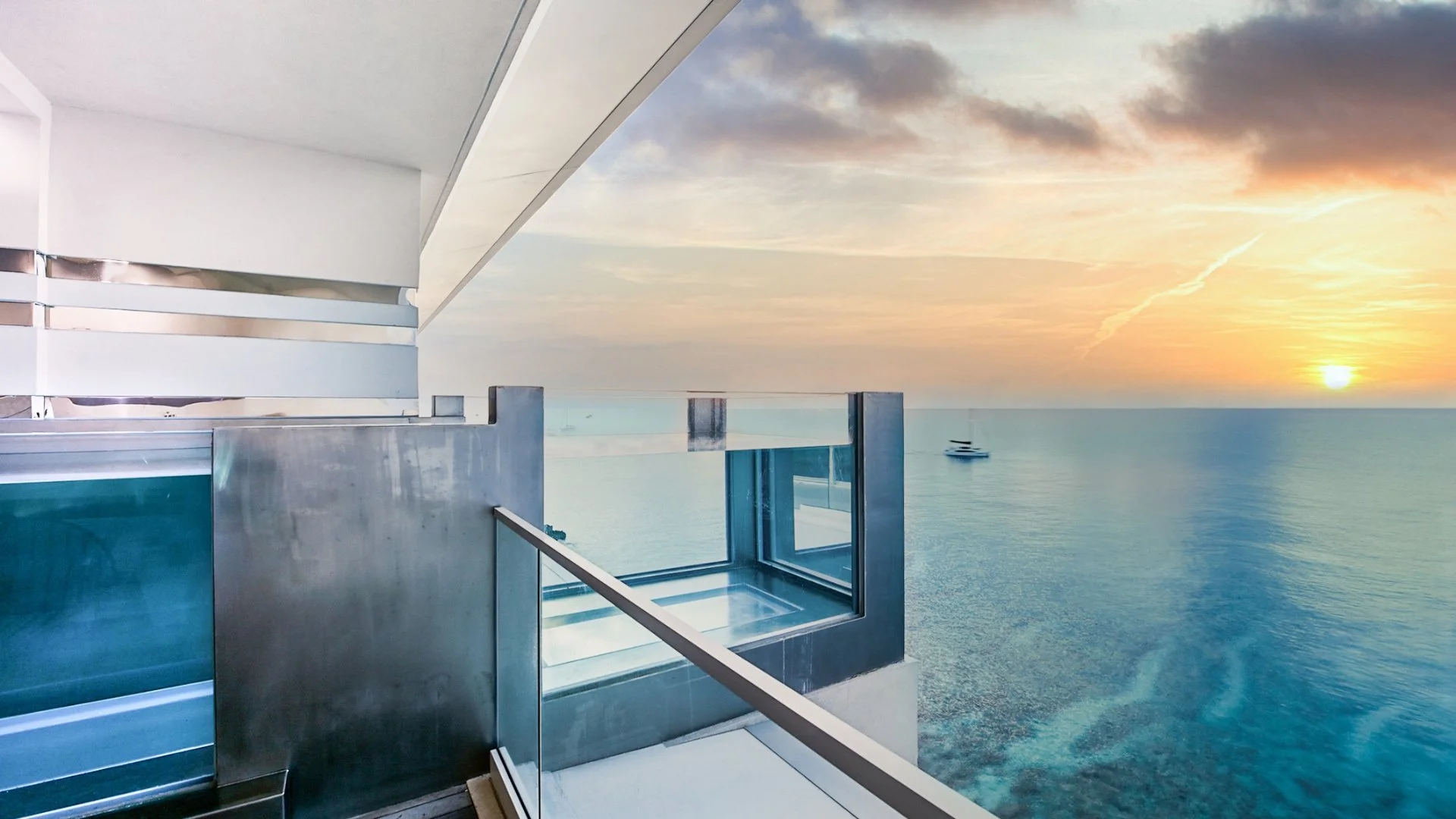
It shows up at FIN in the framing of every space. The full amenity slate is built around the water rather than oriented toward it: a pool whose floor opens to a panoramic view of the reef below, an oceanfront lagoon engineered with saltwater chemistry rather than chlorine, rooftop plunge pools that face the horizon, and a coral conservation initiative woven into resident programming. The water is not the view. It is part of the building.
Waterfront properties delivered this way redefine what “luxury” means by closing the gap between the address and the ocean to zero.
Are Private (In-Unit) or Shared (Building-Wide) Amenities More Important for Residents?
At first read, this sounds like a binary: every dollar of the amenity budget belongs to one camp or the other. That framing misses the design. Inside a luxury apartment building of this caliber, private and shared amenities are not competing for priority. They are sequenced for rhythm.
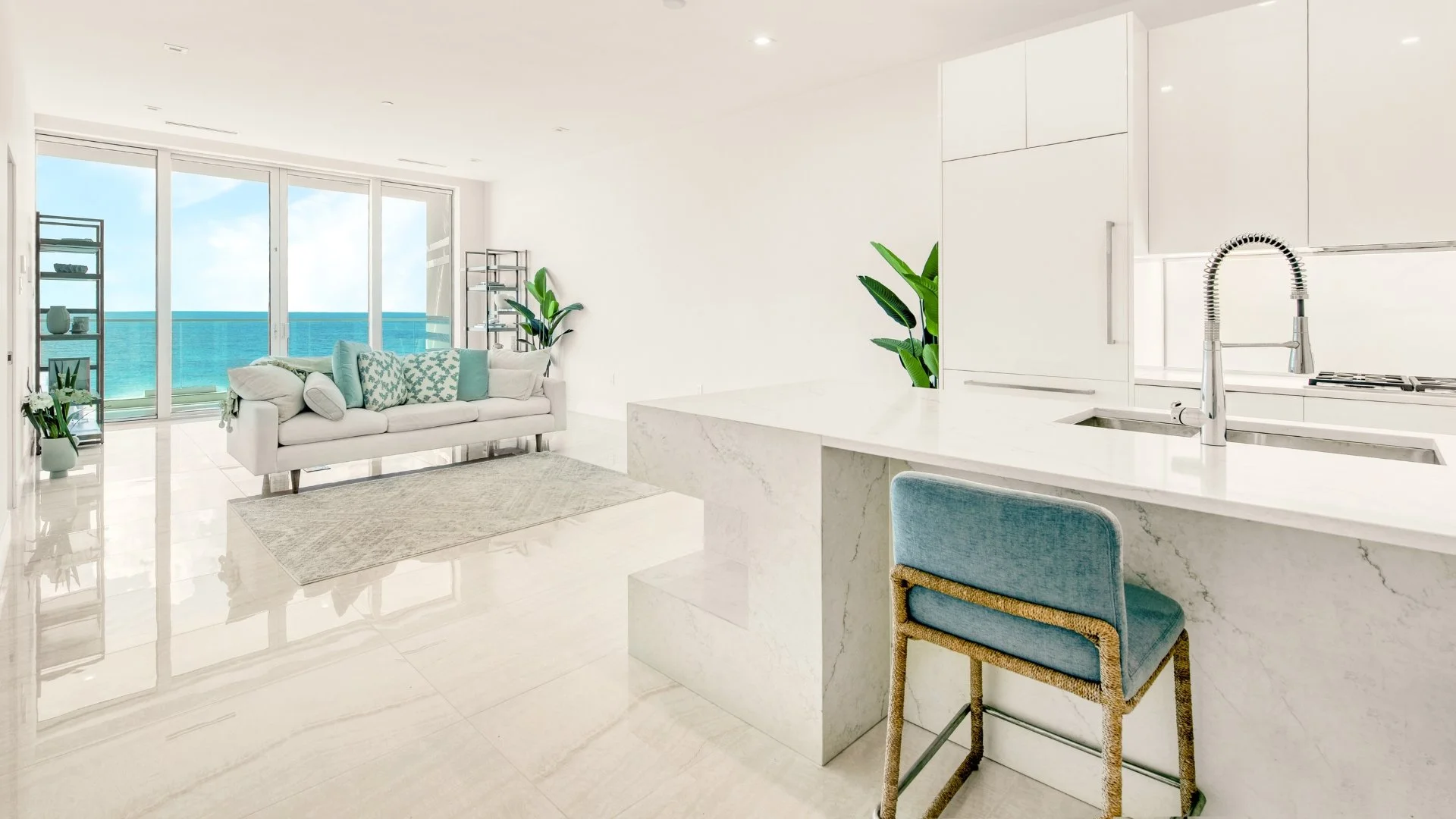
Private amenities carry the morning and the evening: in-unit features, rooftop plunge pools, private elevators that open directly into residences, a spa room for post-workout recovery, and virtual training setups. The point is autonomy.
Shared amenities carry the social register: an owner's lounge designed with a 1920s club feel, the wine cellar, the concierge desk, and the dining and entertaining spaces. These are not for daily survival. They are for the moments when residents want to feel like the building is hosting them.
Calibration between the two is the goal. FIN's sequencing was guided by Michael Ryan's track record across the Cayman Islands, designing buildings that move between privacy and hospitality without friction, where residents pay not for a list of amenities but for a deliberate life cadence.
Where the Bar Goes Next
What FIN demonstrates is that the four amenity questions do not have separate answers. The structural layer, the network of services, the waterfront integration, and the sequencing of private and shared spaces are the same design problem viewed from four angles. Solved in isolation, a building reads as a list of features. Solved as one, the residence becomes the operating system buyers were actually looking for. That is the bar. That is what the next high-end residence will be measured against.
People Also Ask
What is FIN Grand Cayman?
FIN Grand Cayman is a 36-residence Art Deco development on Seven Mile Beach, co-developed by Silverfin Development Company founder Mike Ryan and Dale Crighton. Units range from two-bedroom condos to six-bedroom penthouses.
Who is the developer behind FIN Grand Cayman?
Michael Ryan is the founder of Silverfin Development Company and a developer with more than three decades in luxury real estate. His portfolio spans the Ritz-Carlton Grand Cayman, the Residences at the Ritz-Carlton, Lloyds Chambers in London, La Costa in Costa Rica, and Exclusive Island, among others. His work has helped position the Cayman Islands as a global ultra-luxury market. FIN Grand Cayman is one of the latest projects in that arc, which extends a decades-long commitment to the islands.
Why are luxury apartments in Grand Cayman so expensive?
Cayman is supply-constrained, has no direct taxation, and attracts a low-leverage, high-net-worth buyer base. Beachfront on Seven Mile is finite, which is why Fin Cayman Islands and similar Grand Cayman homes trade at a premium relative to comparable Caribbean markets. For a deeper look at the price dynamics, see The Price of Paradise: Why Are the Cayman Islands So Expensive?.
What makes waterfront properties in Cayman a stable investment?
The market behaves differently from tourism-driven Caribbean economies. Buyers tend to be cash-positive, supply cannot expand quickly, and demand for top-tier homes in the Cayman Islands has held through multiple global downturns.