The City of London is one of the world's most competitive commercial real estate markets. Planning is complex, competition is fierce, and investors with deep pockets are rarely in short supply. So when Silverfin Development and its partners acquired Lloyds Chambers at 1 Portsoken Street in 2013, the question wasn't whether the city had demand. It was whether the team could see something in that building that others had missed.
They could. The Lloyds Chambers redevelopment project became a case study in what commercial real estate development looks like when the discipline is right from the start: buy well, develop a credible vision, secure approvals, and exit at a moment that reflects the value created.
What Is Commercial Development?
At its core, commercial development is the process of acquiring, designing, constructing, or repositioning real estate for business use rather than private residence. That covers office towers, retail centers, mixed-use schemes, logistics hubs, and hospitality.
What separates it from residential development isn't just the end user. It's the entire logic of how value is created. In residential, success is driven by end-buyer demand and sale prices. In commercial, it comes down to tenant quality, lease structures, and the ability to attract institutional capital. Getting those fundamentals right at acquisition is what separates a sound deal from an expensive lesson.
The Commercial Real Estate Development Process
Commercial development follows a consistent sequence: acquisition and due diligence, planning and regulatory approvals, design and concept development, and finally construction or value creation.
That last point matters. Not every commercial development project ends in a build. Securing planning approval is itself a form of value creation, and a well-positioned consent can make a structured exit the most logical strategy. The discipline to recognize that moment and act on it separates experienced developers from the rest.
Lloyds Chambers: The Full Story
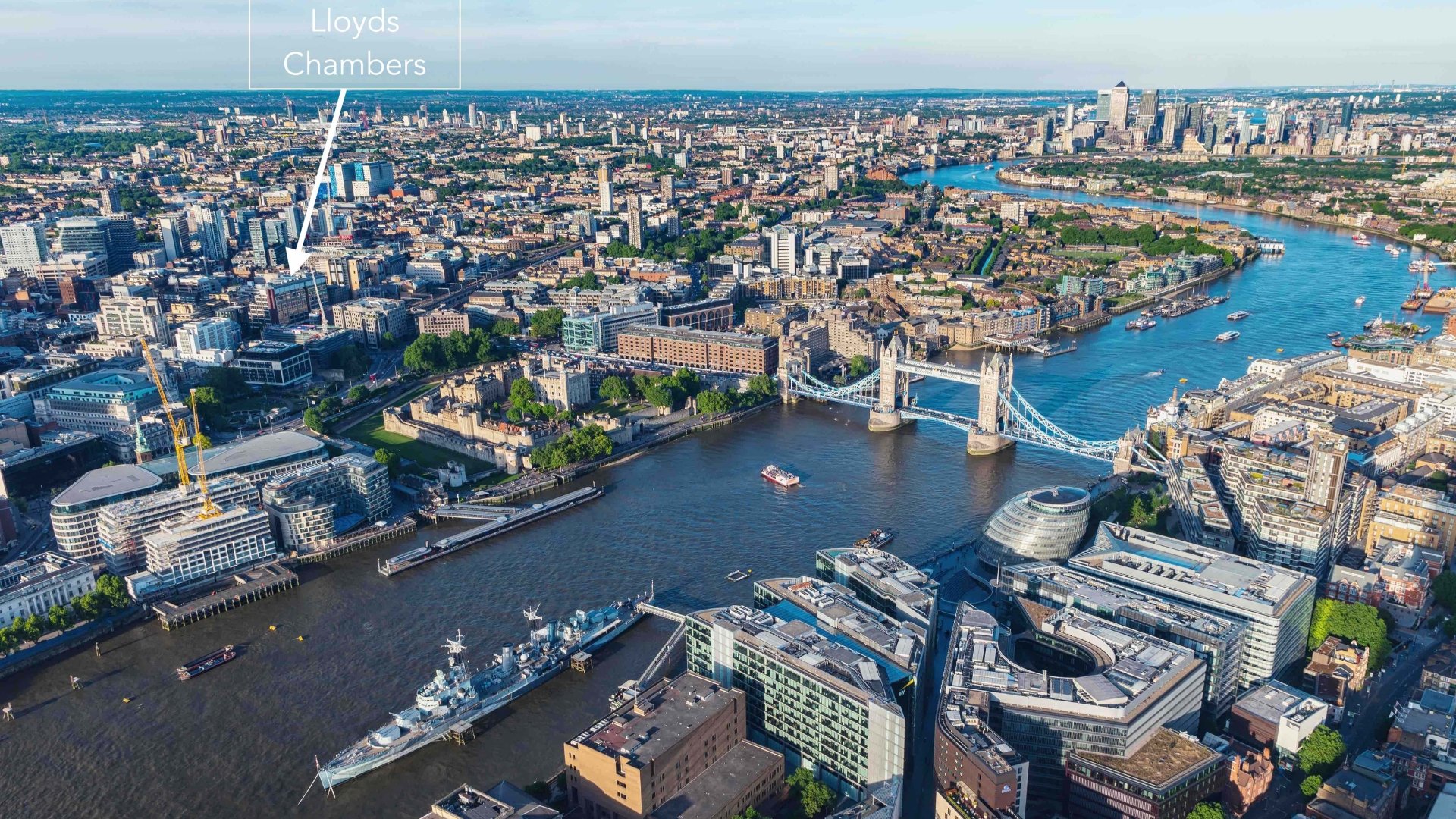
When Silverfin Development focused on the City of London in 2013, it did so through a consortium that brought together serious institutional weight. Alongside Michael Ryan's long-standing commercial real estate development experience, the group included John W. Snow, former U.S. Secretary of the Treasury, global property investment firm Fosun Property Holdings, and British insurer Aviva. The asset they acquired was Lloyds Chambers: a commercial building at 1 Portsoken Street, purchased for £65 million, whose existing configuration no longer met what modern City occupiers required.
The location was solid. Near Aldgate and close to some of London's most active commercial corridors, the site had structural demand that wasn't going away. The question was what to put there.
The answer became The Butterfly: a 400,000-square-foot mixed-use redevelopment with 12 floors of office space above ground and three basement levels for retail, leisure, and building services. The design emphasized a dynamic facade, adaptable floor plans, and wellness amenities built around what the next generation of occupants would require.
As Mike Ryan put it at the time: "The Butterfly, with its beautiful and highly efficient design, will offer office space to meet the needs of the modern occupier."
In 2016, the City of London granted planning approval, the result of years of technical studies and regulatory engagement, and it changed what the building was worth to the market. In 2018, New York-based investor Abraham Schwartz acquired the property for £97 million. Against the original £65 million acquisition, the uplift told its own story: Silverfin hadn't just held an investment. It had fundamentally changed what it could become.
Why Develop Commercial Real Estate Overseas?
Because the best opportunities aren't always local. Global cities like London operate at a different tier of demand: institutional tenants, international capital flows, and supply constraints that most domestic markets can't match. Commercial development overseas also builds resilience. Cycles and currencies don't move in sync across geographies, and a well-structured international portfolio isn't just about yield.
The barriers are real, and for the right commercial real estate development company, that's the point. They keep competition thin. Silverfin's entry into the City of London brought local planning expertise, institutional capital, and on-the-ground knowledge that most overseas developers skip. The firm operates across asset types, from luxury residential like FIN Grand Cayman to commercial schemes in competitive global markets. The discipline transfers. The execution doesn't.
Commercial development rewards those who do the hard work before the easy work becomes possible. For Silverfin, Lloyds Chambers was exactly that: a clear-eyed read of an underperforming asset, a workable plan, and the execution discipline to take it from acquisition to a planning-approved exit. The building changed. So did its value.
People Also Ask
-
Real estate built or repositioned for business use. The key difference from residential is how success is measured: not by sale price, but by who occupies the space, on what lease terms, and what that income stream is worth to an institutional buyer. A well-tenanted building in the right location is a financial asset first and a physical one second.
-
Acquisition and due diligence, planning and approvals, design and concept, construction or value creation, and exit or stabilization. The most consequential decisions happen in the first phase: how an asset is underwritten and how clearly the team understands the regulatory path ahead shapes everything downstream.
-
Yes, and the market has grown considerably. Silverfin Development brings a broad track record across the islands: landmark hospitality, luxury residential, and international commercial experience, with Lloyds Chambers as a clear example of the latter. Learn more about real estate developments in the Cayman Islands.
-
Bifurcated. Top-tier office buildings in well-located urban markets are performing. Industrial and logistics remain strong. Retail is mixed, with experiential concepts outperforming legacy big-box. Secondary office stock continues to face pressure. If you're considering investing in commercial real estate, remember that location quality, tenant covenant strength, and residual value protection still drive every sound decision.
-
A more deliberate approach to partnership. Who handles local planning relationships, which legal advisors understand the specific market, and how institutional co-investors are structured all carry more weight than in a domestic deal. The Lloyds Chambers consortium was built around exactly that logic: domain expertise, local knowledge, and institutional credibility working together in a market that doesn't reward outsiders who go it alone.